Why designing conversational AI is more like training a great salesperson than designing a traditional interface.
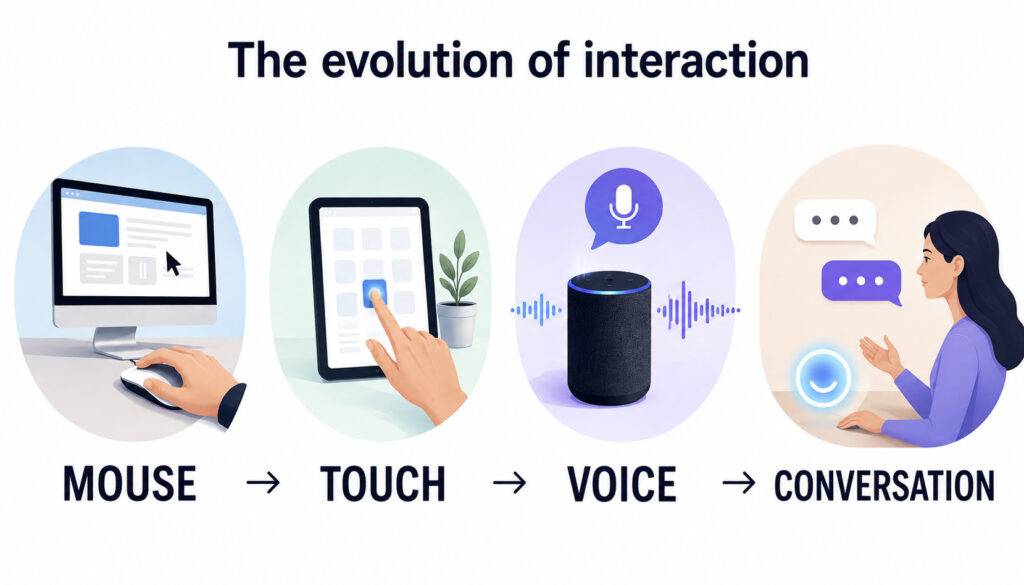
When I began my career in UX, designing software meant designing screens. Every decision revolved around buttons, navigation, menus, and forms. We carefully considered visual hierarchy, information architecture, and the shortest path from point A to point B. If users couldn’t find something, we redesigned the interface. Those fundamentals still matter today. But over the past several years, something remarkable has happened.
Today I spend less time asking, “Where should this button go?” and much more time asking, “How should this conversation unfold?” That’s a very different design problem.
The Day My Brain Switched Interfaces
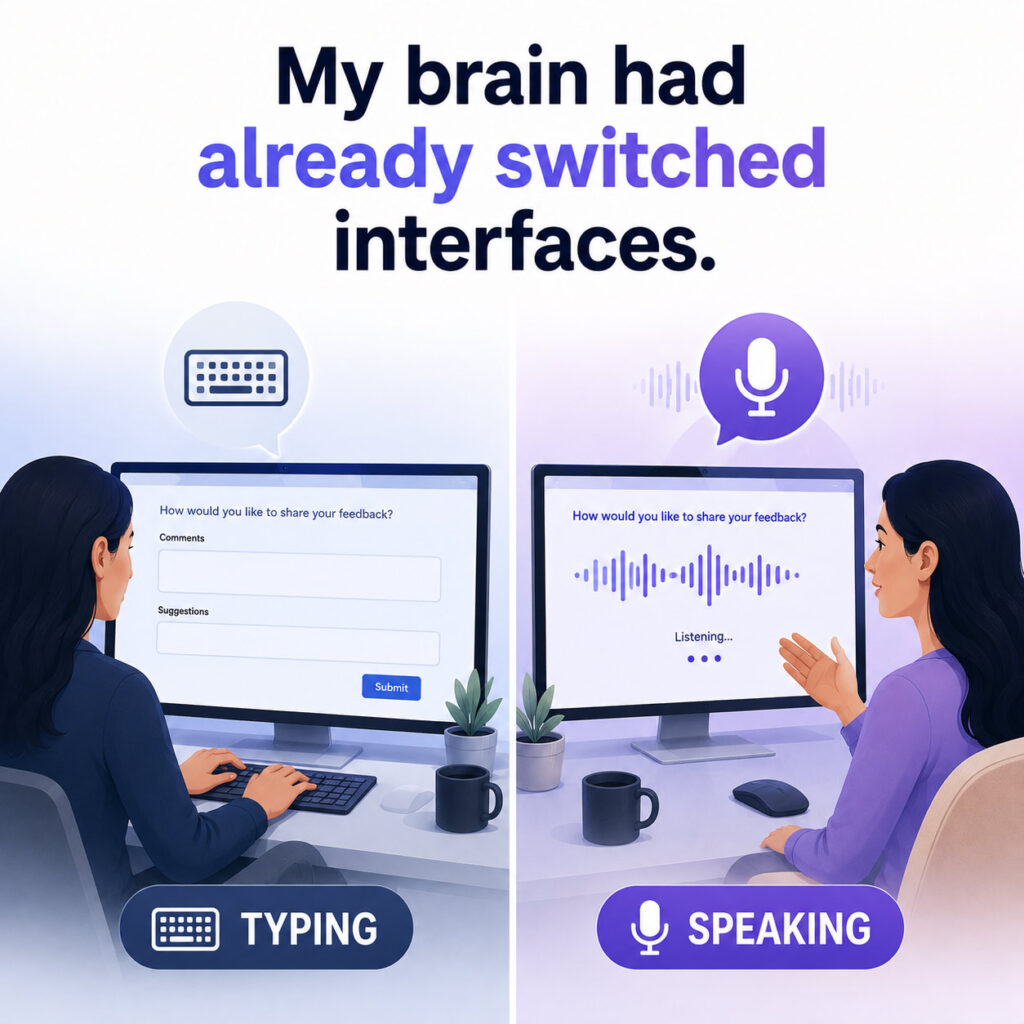
I was evaluating conversational AI responses inside a traditional web application. The interface consisted of text boxes where I needed to score responses, rewrite conversations, and explain my reasoning.
After about an hour, I became frustrated.
Not because of the work.
Because I wanted to stop typing.
I wanted to talk.
I even turned on my Mac’s dictation feature, hoping I could simply speak my thoughts into the computer.
It wasn’t quite good enough.
But that moment stayed with me.
Without realizing it, my own expectations had changed.
After spending years designing conversational AI, conversation had become my preferred interface.
A Great Conversation Feels Like a Great Salesperson
Think about the last time you walked into a store looking for help. A great salesperson listens carefully, understands what you’re trying to accomplish, answers your question clearly, and knows when to stop talking. A great conversational experience should feel like talking to someone who listens, understands what you need, answers clearly, and knows when to stop talking.
People don’t experience the AI. They experience the conversation.
|
|---|
Designing Conversations Requires Different Questions
 Traditional UX taught us to think visually. Conversational UX asks us to think linguistically.
Instead of designing screens:
* We’re designing timing.
* We’re designing personality.
* We’re designing trust.
* We’re designing recovery.
* We’re designing confidence.
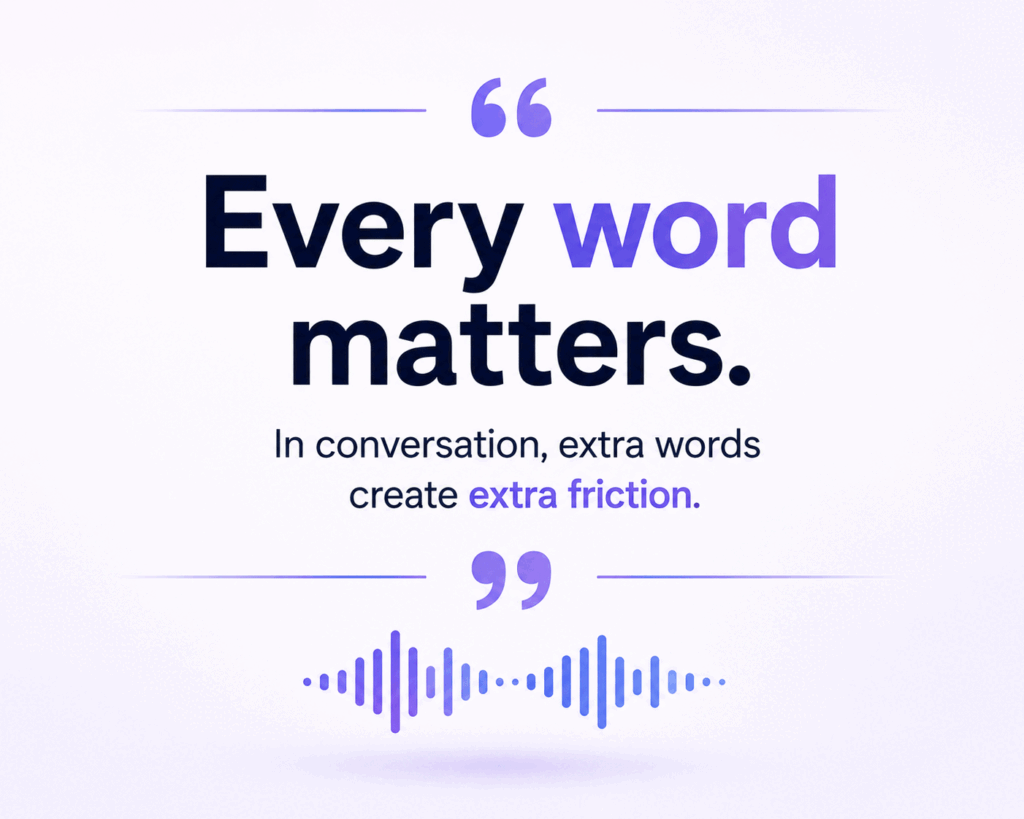
“One of the biggest lessons I’ve learned is that customers can’t skim a voice response. If a spoken answer is too long, they have to sit through every single word.”
That’s why every sentence matters. Sometimes the best design decision isn’t adding more information. It’s removing it.
The Principles Never Changed
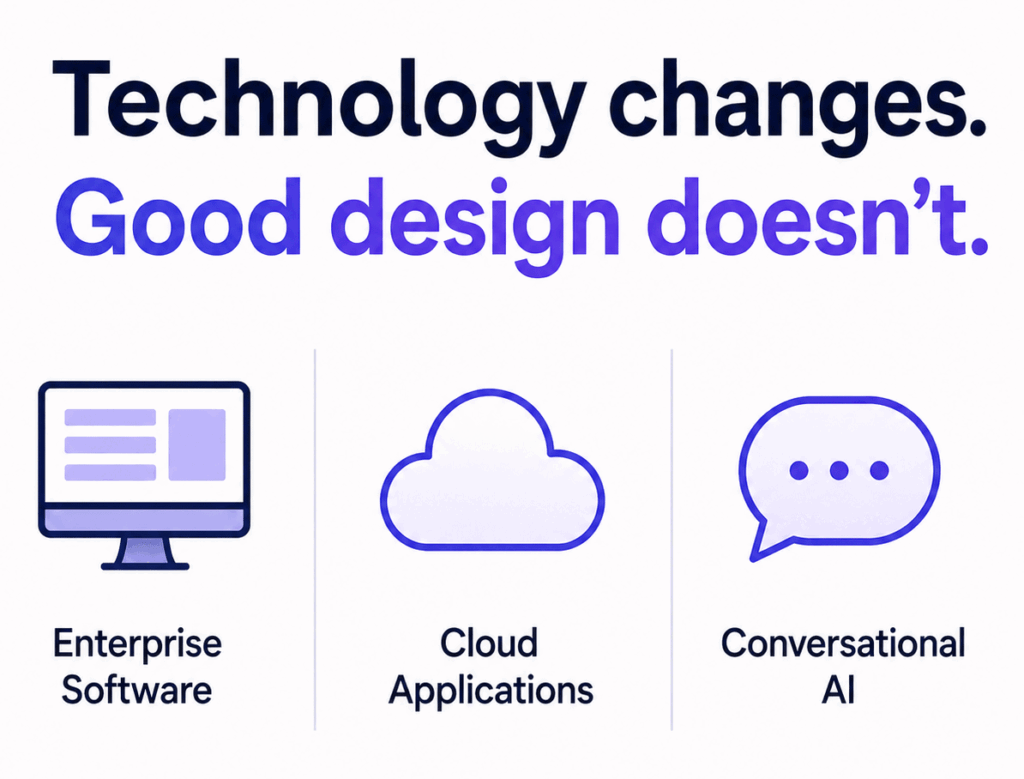
- Help people accomplish what they came to do.
- Reduce friction wherever possible.
- Build trust through every interaction.
- Make complex technology feel simple and intuitive.
The tools will continue to evolve. Interfaces will continue to change. But good design has never been about the technology itself—it’s about creating experiences that help people succeed.
The Conversation Is the Product
When I first started designing software, success was measured by how intuitive the interface felt. We focused on navigation, layouts, and reducing the effort it took for people to accomplish a task. Those principles still matter, but conversational AI has expanded what we design.
Today, we’re not just designing screens—we’re designing conversations. That means thinking beyond buttons and menus. We have to consider how every response sounds, how trust is built, and how each interaction helps people feel understood and successful.
The principles are surprisingly simple:
- Listen before responding.
- Answer clearly and concisely.
- Build trust with every interaction.
- Know when to stop talking.
I don’t believe visual interfaces are disappearing, but I do believe conversation is becoming one of the most natural ways we interact with technology. As designers, that means we’re responsible not only for what people see, but also for how technology communicates.
The conversation isn’t just part of the experience—it is the experience.
Or, as I’ve come to think of it…The conversation is the product.